Showing posts with label Legislation. Show all posts

Monday, December 29, 2025

What California AB723 means for Sacramento home buyers and sellers...

If you’ve ever clicked through a Sacramento home listing and thought, “Wow… this looks amazing,” only to tour the house and quietly wonder where the sofa, that amazing sunset, and vibrant green grass in the front yard went, then you’re not alone. Real estate photos have gotten very good. Sometimes too good. 

On all of my listings I hire an awesome professional photographer who does an stellar job at capturing the perfect angle, balancing light, and softening the rough edges of homes...but some agents and photographers take things a few steps too far and use AI or other tools to virtually add features a home just does not have, or photoshop out those fugly power lines running through the backyard, or virtually remodel a home. 

I have walked into homes with clients before and been like "Huh, I thought this kitchen was remodeled?"

Enter California AB723, a new law going into effect next week that is designed to bring and fewer surprises to real estate marketing photos. Starting January 1, 2026, real estate listings in California will be required to clearly disclose when images have been digitally altered in ways that materially change the features of the property. In plain English: if a photo has been edited to add furniture, change landscaping, remove unsightly neighboring properties, repaint walls, or otherwise make the property look meaningfully different than it is in real life, the listing must say so. And the listing must make this original image available. 

Now, don’t worry: this doesn’t mean listings have to look boring or unpolished. Basic touch-ups like adjusting lighting, color balance, optimizing the way a room looks with a wide angle lens, or cropping a photo are still perfectly fine. AB723 focuses on changes that could impact how a buyer perceives or understands the actual condition or features of the home. 

So as an example from one of my own listings -- last year I wanted to illustrate that the backyard of an Arden-Arcade home I listed was potentially big enough to build an Accessory Dwelling Unit. So I hired someone to add a rendering of an ADU to one of the aerial drone images my professional photographer took. And they also happened to edit the grass to be more green (which I did not ask them to do but it sure made the photo look better!). I did add a disclaimer to the photo and include the original in the listing, however now in the future I would also want to add a disclosure to the image specifically noting it was digital altered. For what it is worth, I also added some virtual staging furniture to two rooms, and did disclose the images were altered and provided the originals, as you can see in the archived listing online. Was I required to by law at that time? No. But I have always felt transparency is better. And now everyone in California will have to disclose digital alterations.

For home buyers, this is a win. You’ll have clearer expectations before you ever step foot inside a home. If a listing photo has been digitally altered, you’ll know it, and you’ll also have access to the original, unaltered images. Fewer surprises means better decision-making, less frustration, and hopefully fewer “Wait… where did that go?” moments during showings. 

For home sellers, this law encourages transparency without taking away great marketing. Virtual staging and enhanced photos can still be used -- they just need to be clearly labeled. Trust me seller, you want to avoid buyer disappointment when they walk in the door. That can leave a bad taste in a buyer's mouth...you want a buyer to connect with your home, not be frustrated by a big letdown or upset expectations. 

Real estate is already emotional enough for buyers without feeling catfished by a listing photo. This new law will help keep expectations realistic.

Monday, March 24, 2025

How Wildfires Impact the Environment, Public Health, and the Economy...

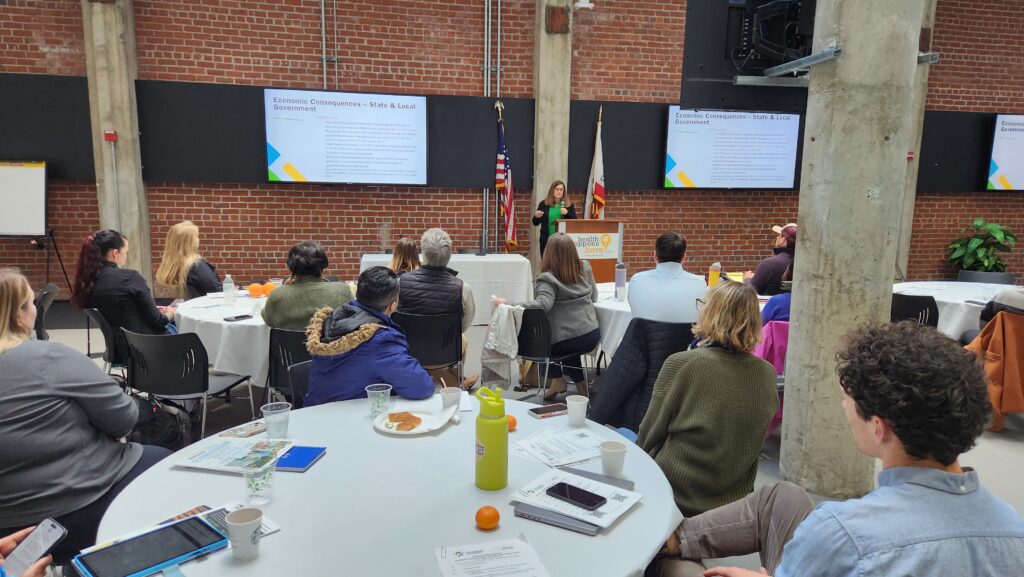
Last week, I had the honor and privilege of co-presenting economic research at the Capital Region Climate Readiness Collaborative (CRC) and the Cleaner Air Partnership (CAP) workshop “Building Regional Resilience: How Wildfires Impact the Environment, Public Health, and the Economy.” Speaking alongside leaders from Yuba Water Agency and Sutter Roseville Medical Center, the workshop session I lead spotlighted how the spillover effects of wildfires ripple through regional (and state and national) economies. 

If you really want to geek out and look at my presentation slides, they are posted online and start on slide 42 here.

It was inspiring to see over 80 stakeholders—nonprofit, municipal, healthcare, business, and philanthropic partners—come together to elevate wildfire readiness and invest in a stronger regional economy. I’m excited to continue working the Sacramento Association of REALTORS® along with CRC and CAP, translating this economic evidence into policies that help our Sacramento region proactively work to mitigate wildfire strikes.


Thursday, December 5, 2024

Facing Foreclosure? A New California Law AB2424 Could Give You More Time to Sell Your Home...

During the years of the Great Recession, the vast majority of my Sacramento area listings between 2007 - 2012 were with home sellers in some sort of distress or default. And, often I would receive panicked calls from homeowners toward the end of the foreclosure process -- days before the foreclosure was to take place -- asking to list and sell their home asap. And that scenario was extremely difficult to work though, because many mortgage companies would not delay a foreclosure to allow the homeowner to sell. I fought tooth and nail -- sometimes with success and we were allowed to delay the foreclosure and given time to list/sell the home, and other times the home was foreclosed out from underneath the homeowner. 

I am sure you can imagine how devastating that would be.

Well -- thanks to a new law passed in 2024, if you are a homeowner who is facing imminent foreclosure of your home, AB2424 may give you some extra time to sell your home before it is foreclosed out from under you. 

I so wish this had been the law back in the day! Better now than never...Here’s what you need to know in simple terms and how the new rules from AB2424 may be able to help you:

First and foremost -- under the new law, homeowners facing foreclosure should be provided 45 days to sell their home. Of course there is a process to follow, and if followed correctly, you should have ample time to sell your home before foreclosure. If you are staring down the barrel of a foreclosure (also known in California as a "Trustee Sale"), and decide to list your home for sale with a licensed real estate agent, you can request a delay in the foreclosure. If you sign a listing agreement with a real estate agent at least 5 business days before the foreclosure sale date, the foreclosure may be postponed for 45 days. This will provide time to market your home, find a buyer, and close the sale...so you may be able to pay off your delinquent mortgage, sell your home, take your net proceeds (or complete a "short sale" if you have no equity), and avoid foreclosure of your home. 

Have an accepted offer on your home? If you find a buyer for your home and sign a purchase agreement (an accepted offer), you can ask for another delay. As long as your real estate agent follows the correct process, submits the signed purchase agreement 5 business days before the new sale date, the foreclosure may be pushed back for yet another 45 days. This means that as long as you’re actively working to sell your home, the AB2424 gives you a couple different opportunities to delay foreclosure and potentially walk away with your home equity as cash in your bank account.

Peeps, this is a huge deal. I can't even tell you how many more homeowners I could have helped to avoid during the recession if this had been the law back then!

If you are a Sacramento homeowner facing foreclosure and want to list your home for sale -- do not hesitate to reach out to me. I welcome your call at 916-342-1372 or email me at erin@erinstumpf.com.

Monday, September 23, 2024

Proposition 33: VOTE NO

Let me clear up misperceptions about Proposition 33: VOTE NO. It is a deeply flawed rent control initiative that will hurt both California's renters and housing providers. Despite some confusion I’ve seen and heard about what this measure would do, let me be crystal clear: Prop 33 would dismantle key protections under the 1995 Costa-Hawkins Rental Housing Act (passed by the California Legislature) and lead to harmful consequences for the housing market. 

Here’s why you should vote NO: 

(1) Prop 33 would cripple development of new rental properties: Prop 33 would allow rent control on properties built after 1995. Right now, Costa-Hawkins prevents rent control on newer buildings, so that developers continue to invest in creating rental housing. If Prop 33 passes, rent control could be imposed on all properties, even new construction. Why would any developer build in California if their units could be immediately subject to rent control? This will absolutely bring development of new rental properties to a screeching halt, worsening the housing crisis. How would this be good for anyone? 

(2) Prop 33 would eliminate fair rent adjustments after a tenant moves out: Under Prop 33, housing providers would no longer be able to raise rents to market rates after a tenant moves out. Currently, Costa Hawkins allows "vacancy decontrol" which permits rents to be reset to a market-rate when a tenant vacates a unit. This ensures housing providers can cover costs like renovating the unit, maintenance, and the rising costs of property taxes and insurance. Without this, providers will absolutely struggle to keep up with the increasing costs of maintaining their properties and keep up with inflation, leading to financial strain and fewer rental options as these housing providers decide to go out of business. How does that help tenants? 

(3) Prop 33 would hurt “mom and pop” property owners: Prop 33 would even allow rent control to be applied to single-family homes, which are currently protected under Costa-Hawkins. This move would further discourage single-family homeowners from renting out their properties, shrinking the already limited rental market and reducing housing options for families. I’ve personally talked to several rental homeowners who are fearful of Prop 33 passing and would sell these homes immediately - which would take these rental homes off the rental market. How’s that good for tenants? 

Prop 33 is literally a recipe for disaster. It will stifle new housing development, punish housing providers, and ultimately lead to fewer (not more) rental options for Californians. We are currently over 3 MILLION housing units short of what we need in California according to the California Department of Housing & Community Development. Let’s focus on fixing our severe housing shortage and on BUILDING MORE PLACES FOR PEOPLE TO LIVE. Please - vote NO on Prop 33.

Thursday, May 11, 2023

Busy time at the California and National Associations of REALTORS board meetings!

It has been a busy last couple of weeks! I serve on the California Association of REALTORS® (C.A.R.) Board of Directors, and the National Association of REALTORS® (NAR) Board of Director, and for the last couple weeks in addition to helping my clients buy and sell like any typical agent would, I have also been helping craft policy positions and advocate on behalf of my profession and homeowners.

In addition to being a Director on the Board, at C.A.R. I am the Vice Chair of the Federal Issues policy committee. This committee advises the C.A.R. board as to what federal policies to advocate for in conjunction with NAR. Pretty cool stuff.

In addition to being a Director on the Board, at NAR I am the Chair of the Federal Taxation policy committee. Last week my committee and our Board of Directors moved internal policy forward to advocate for reduced capital gains for owners of single family and 2-4 unit rental properties who sell to owner-occupants...

It is pretty exciting to be on the forefront of advocating on behalf of our nations 1.5M+ REALTOR® members and millions of property owners. As someone with a Masters Degree in Public Policy, operating at such a high level to advocate for policies that increase homeownership is really awesome. Our next meetings are in the fall and I can't wait!


Thursday, July 14, 2022

Appointed as 2023 Chair of the National Association of REALTORS® Federal Taxation Committee!

2022 has been amazing thus far and I am really excited for next year already. Why? I learned of my appointment to be the Chair of the National Association of REALTORS® Federal Taxation Committee for 2023. To say I am excited is an understatement! I have been serving this year as the 2022 Vice Chair of the NAR Federal Taxation Committee, and I absolutely love being an engaged and active member of all three of my associations (being Sacramento, California, and National). 

It is this very involvement that inspired me to go to graduate school and earn a Masters Degree in Public Policy & Administration, which I finished in 2018. I love advocating for homeownership, private property rights, and importantly -- tax rules that incentivize and ease property ownership and property transfer. So to help drive our federal taxation policy agenda is really cool. All this while being a top producing agent...many people ask me how I balance all of this, and really when you love what you are doing everything is fun and does not feel like work. And this all helps me be a better agent for my clients.

Friday, June 24, 2022

Own or purchasing a property with racially restrictive covenants? Apply for a Restrictive Covenant Modification...

If you are buying a home and review the Preliminary Title Report, you may notice a new disclosure from your title/escrow company that accompanies the section of the report that covers the Covenants Conditions & Restrictions (aka, CC&Rs -- which are essentially the developer-imposed rules that govern a community). This disclosure was born from California Assembly Bill 1466 (McCarty) which created a process to provide home buyers information to proactively remove racially restrictive covenants at the time of purchase. This disclosure will be required starting July 1, 2022.

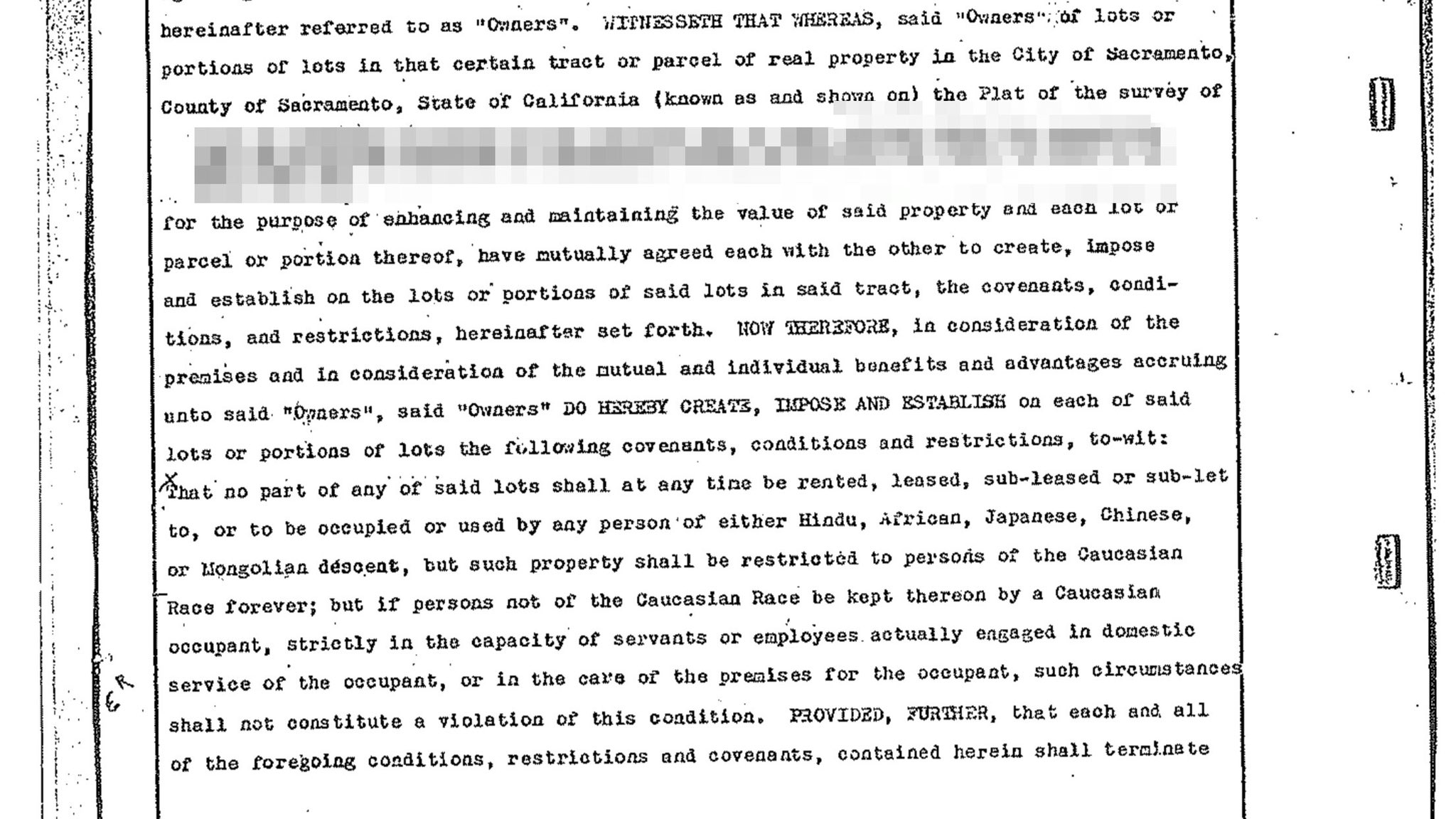
Sadly, the CC&Rs for many properties built in and around Sacramento County that were developed prior to the civil rights movement contain racially restrictive covenants. I sell several homes per year where the CC&Rs contain these covenants. I come across some really repugnant restrictions that were intended to permanently racially segregate neighborhoods. And I think most home buyers and homeowners are unaware these covenants exist.

Have you ever seen a racially restrictive covenant? They are horrifying. 

A couple years ago I was interviewed by Capital Public Radio about racially restrictive covenants. Here’s a snapshot of the CC&Rs of a property I sold that was built in 1944. “...but such property shall be restricted to persons of the Caucasian race forever.”

These CC&Rs are now legally null and void, however these records stay with the property even though they are unenforceable. Counties have an application process to remove racially restrictive covenants. Most home buyers and homeowners are unaware of this process, and I hope that this new legislation helps create awareness. Here are links to local county websites to their applications and more information:


If you are interested in the history of racially restrictive covenants, books like The Color of Law provide an overview. 

Thursday, June 16, 2022

Per the California Apartment Association: AB 1482 allowed rent increase is set at 10% statewide

If you are a landlord of a property that falls under the requirements of California AB1482 (2020 Tenant Protection Act), the California Apartment Association (CAA) has released the allowable rent increase numbers based on the current consumer price index calculations for different areas in the state.

Statewide, CAA has determined that the allowable rent increase for properties that fall within the requirements of AB 1482 to be 10%. This is not surprising considering inflation numbers are globally pretty high right now.

California AB 1482 limits rent increases in any 12-month period to "no more than 5% plus the percentage change in the cost of living (CPI), or 10%, whichever is lower". For increases that take effect on or after August 1, 2022, due to inflation, the California Apartment Association has noted that all of the applicable area's CPIs are 5% or greater. So with that, the allowable rent increase is 10%. Until they re-evaluate things...so if you are reading this well after today (June 16, 2022), best to make sure this information is still relevant.

There are many types of residential rental properties that are included and excluded from the rent cap and just cause eviction requirements of AB 1482 (and for added fun, in some areas rent control ordinances supersede AB 1482) -- so if you have questions, CAA is a great source of information, or may wish to consult a professional property manager or an attorney. 


Tuesday, June 7, 2022

June is National Homeownership Month, and what better way is there to celebrate than to fund housing opportunities?

June is National Homeownership Month! And I was excited to participate in a video by the California Association of REALTORS to urge Governor Newsom and the California Legislature to fund affordable homeownership opportunities via the state budget. The state is forecasting an approximate $97.5B (yes, that is BILLION) budget surplus for the coming fiscal year. Just think of all the ownership opportunities our state could create with even just a small sliver of funding. I sincerely hope this moves the needle in the right direction. Homeownership creates so many opportunities for people that rentership just does not provide.

I am a Realtor from C.A.R. on Vimeo.

Monday, October 4, 2021

Appointed to be on the Board of Directors for the National Association of Realtors for 2022-2024 AND to be Vice Chair of the Federal Taxation Committee!

I am super excited for 2022. Why? As an association volunteer leader since about 2008, this year the stars have aligned.

And additionally, like the icing on the cake, I learned of my appointment to be the Vice Chair of the NAR Federal Taxation Committee for 2022. To say I am excited is an understatement!

I absolutely love being an engaged and active member of all three of our associations. It is this very involvement that inspired me to go to graduate school and earn a Masters Degree in Public Policy & Administration, which I finished in 2018. I love advocating for homeownership, private property rights, and importantly -- tax rules that incentivize and ease property ownership and property transfer. So to help drive our federal taxation policy agenda is really cool.

All this while being a top producing agent...many people ask me how I balance all of this, and really when you love what you are doing everything is fun and does not feel like work. And this all helps me be a better agent for my clients. 

Wednesday, April 21, 2021

Erin, where are all the homes that should be for sale in Sacramento?

I was quoted in a Sacramento Bee article last week, that among other things discussed the imbalance of supply of homes for sale and demand to purchase homes. I was quoted in the article saying "At some point there is going to be this backlog of sellers who have forgone selling. We are going to see those people put their houses on the market."

BUT WHEN?

That is a fabulous question. I thought I'd take a minute to describe some of the things I have been hearing from my clients, as well as some of the bottlenecks and challenges sellers have in this environment. At some point the trickle of new listings will be a little more steady, but we have some things to work through in our Sacramento real estate market.

(1) Some sellers still do not feel safe having buyers in their homes. Some homeowners who want to sell have a higher or lower risk tolerance than others. While the COVID19 vaccine has recently become more widely available, it will still be several months before the majority of the population in our region has been fully vaccinated. And cautious sellers who fear catching COVID19 have been staying put. I have conversations with would-be sellers in this category all the time. It does seem like there is a light at the end of the tunnel, but every would-be seller will have a different comfort-level here.

(2) The court systems have been backed up. You may not realize how many transactions are dependent on court orders or other legal processes. For example the probate court system, which governs who will manage the estate of a deceased person, was closed for a few months. There is a tremendous case backlog, and those who will ultimately decide if and when to sell a home that was owned by someone who died are not able to manage the estate affairs without a court order. I have one client who filed for probate back in the summer 2020 who was just recently finally granted authority to handle his father's estate. Courts also often weigh in on the sale of homes in divorce/family law and bankruptcy cases too.

(3) There is an eviction moratorium and various "just cause" ordinances in place preventing landlords from displacing tenants. While I feel for the plight of tenants who face a COVID19-related hardship, there are property owners who would love to sell if they were able to end the tenancy of their current renters. It is often challenging to sell a home with tenants for a variety of reasons. I was contacted by a single-family homeowner last year who had a non-paying tenant, and ultimately they were advised by their attorney that they could not evict the tenants and should not try to sell until the tenants were either paying rent or move out. 

(4) There is a moratorium on foreclosures. While we have been in an increasing price market for a while in Sacramento and distressed property listings (short sales and foreclosures) account for a very small fraction of listings, these listings are not coming on the market as quickly. (4b) Homeowners who are unemployed or under-employed are propped up by federal stimulus, additional pandemic unemployment insurance income, and loan forbearance. At some point, some of these homeowners will sell when the federal assistance expires.

(5) It can be a little more difficult to prepare a home for sale. I have spoken to many contractors are reluctant to work on occupied homes. For those that do, their schedules tend to be booked out for weeks or months. Some organizations have stopped taking certain donated items, so clearing out the house can take longer. Many building materials, supplies, and appliances have become scarce and can be difficult or expensive to obtain. (I personally am still waiting for delivery of a new cooktop I ordered in early March. I will be lucky to have it by the end of May according to the supplier. No it is not stuck on the Ever Given!)

(6) Where will the seller move once they sell? In this low inventory environment for both purchasing AND renting homes, sellers often express concern that if they sell their home they may not be able to purchase or rent something else. Not every seller has an easy move-out plan. I easily have 8 would-be sellers who would list tomorrow if they were confident in finding a replacement property. There are still plenty of ways to work through this, but some of the options can be a little stressful for risk-averse sellers/buyers.

So hopefully this is informative. And as I was quoted in the Sacramento Bee article -- at some point sellers who have not listed their homes WILL sell. I have a queue of many people who very much want to sell. And at some point we will see those homes come to market. There are ways to work within many of these challenges with a little creativity and determination. I am still listing plenty of homes...

The good news is I am seeing a little more inventory as we inch more into the spring. This is the time of year when we normally see more listing inventory...and I can only hope it takes some of the upward pressure off the market for home buyers, as the current trajectory of the market is not sustainable for the long term. but we all know there is less that is the normal we are all used to. 

Wednesday, January 13, 2021

California Proposition 19 passed...now what? Property tax basis portability explained... kinda...

I have had several seller clients ask me recently about the implementation of California Proposition 19, which passed back in November. I think most people assumed it would go into effect at the beginning of 2021, however that is not the case. I prepared a table that I hope will be a helpful reference tool for those seeking general information. 


The property tax basis portability element of Proposition 19 actually goes into effect on April 1, 2021. 

This allows seniors (over age 55), the victims of wildfires, and severely disabled to transfer their existing property tax base up to 3 times, anywhere in the state, and to a property of higher or lower value. 

Many Sacramento home sellers have asked me if they can sell the current home and close the sale prior to April 1. Or if a home they sold in 2020 would qualify if they have not purchased another one yet. The short answer is - I do not know. 

Proposition 19 (which was Assembly Constitutional Amendment 11 in the state Legislature) does not address that. A qualified homeowner has 2 years to identify and close on a replacement property to transfer the low property tax base over to, however it is unclear if that 2 years commences on April 1, or there is perhaps a 2 year lookback period commencing on April 1.

It is possible that there will be some new legislation introduced soon to eliminate that ambiguity in Proposition 19, but as of this minute there is no clarity. 

For now, I suppose the safest solution is -- do not close the sale of your current home until April 1 or later. Realistically, if you want to list your Sacramento home in the near future, you should be able to do so. The closing date of your transaction is completely negotiable. And your listing agent can note in MLS that the sale must close on or after April 1.

So for example, if you were to list your home on February 17th, respond to offers received on the 24th, get into contract with your buyer on the 26th, -- closing on Friday, April 2nd would be slightly over a 30-day escrow. 

I have a couple seller clients who will be employing this very strategy. It's a seller's market right now, and they'd love to list their homes asap.

Since I am not an attorney and not a CPA, it is best to get tax and legal advice from qualified professionals. 

The Sacramento County Assessor's office has prepared some Prop19-related information with linked forms as well here.


Tuesday, October 6, 2020

California Proposition 19, and why I am voting YES...


Several colleagues, friends, and clients have asked me recently about a few of the propositions that will be on the ballot for this upcoming election. I guess with my 15-year tenure as a realtor and a graduate degree in public policy they must think I know what I am talking about. Ballots are going out in the mail this week, so I thought it would be timely to post a little information for those who are interested. Today I will explain is Proposition 19, the "The Home Protection for Seniors, Severely Disabled, Families, and Victims of Wildfire and Natural Disasters Act". 

Proposition 19 is on the ballot as a result of a California State Assembly Constitutional Amendment - ACA11 (Mullin), which passed through the legislature with bipartisan support this summer. The proposition has a few main components. 

(1) It expands existing law (previously, Proposition 60 and Proposition 90) to allow seniors, the victims of wildfires, and severely disabled, to transfer their existing property tax base up to 3 times, anywhere in the state, and to a property of higher or lower value. Currently seniors can transfer their property tax base, but they have to stay within the same county AND buy a home of lesser value than the home they ultimately sell. Often these individuals need to move to another county to be closer to family where it is not possible to buy a lesser priced home. For example, if you want to sell a home in Sacramento but want to buy in Alameda where homes generally more expensive you may have a difficult time buying a lesser priced home. If they buy a higher priced home, they would be able to pay a new blended rate based on the difference between the home they sell and the home they buy. Currently people who lose homes in wildfires do not have the option to transfer their existing tax base for the home they lost to a replacement property. And often disabled people need to sell and purchase different homes that can better accommodate their disabilities. 

As a realtor, I encounter situations all the time where people decide to stay in homes they can not maintain or that are too large now that the kids are gone, and they do so just because they cannot afford a higher property tax bill. For example, I have an elderly client whose adult kids have moved away, her husband died, and she can't afford to downsize from her 4 bedroom home into a condo near her kids because on a fixed income she cannot afford the increase in property tax. This would allow people in these types of situations to sell and right-size their living situation with no tax penalty. And with the number of homes lost recently to wildfires, it will allow those who are wildfire victims and never intended to move to not suffer a tax penalty as well. And to allow disabled persons to buy homes that better accommodate their disability is a no-brainer. 

(2) The second component is that it reforms the inheritance tax exclusion. Existing law (previously, Proposition 58 and Proposition 193) allows parents and grandparents to leave their children and grandchildren residential properties and transfer the low property tax base. It also allows property tax base transfer of commercial and other investment property with assessed value up to $1M. Proposition 19 would allow tax base transfer of inherited properties with assessed value up to $1M to family members who will OWNER OCCUPY the home. It also eliminates tax base transfer of inherited commercial and investment property. 

A couple of years ago a LA Times article brought to light that actors Jeff and Beau Bridges inherited a Malibu beach-front property valued at like $20M with a tax base of a few hundred thousand. They use the property as an income-producing a vacation rental and rake in the profit while paying relatively little property tax. This "focusing event" prompted the California Legislative Analyst's Office (LAO) to study this issue of the Inheritance Tax Exclusion. The LAO report noted that MANY people who inherit properties benefit from keeping a low tax base and use the properties for income and profit substantially from this low property tax. The LAO recommended the the legislature look into this, as the original intent of Propositions 58 and 193 was to pass this tax base along to relatives who were going to live in their parents' and grandparents' properties. As a result, there was actually a proposed California Senate Constitutional Amendment (SCA3 Hill) that passed through several committees before Hill pulled it knowing it's provisions would be included with another proposal. 

(3) As there will be additional property tax revenues generated as a result of these changes to property tax assessment transfers, Proposition 19 increases revenues to local governments, and for part of the additional revenues establishes the California Fire Response Fund to specifically fund firefighting efforts.

As it stands, there is a broad and bipartisan coalition of support from MANY groups who don't often see eye-to-eye on things. You do not frequently see Senior and Disability Organizations, Fire and Public Safety Advocates, Labor Organizations, Community Advocates, Education Advocates, Political Organizations, and Business and Trade Organizations support the same initiative.

So with that, I am an enthusiastic YES vote on Proposition 19. Proposition 19 addresses several problems and inequities I see frequently while funding additional support to fight California's wildfires, and providing funding local governments and schools.

Sunday, January 12, 2020

A unexpectedly amazing start to 2020 - honored by the Sacramento Association of Realtors as the "Realtor of the Year"

I was really excited for the 2020 Sacramento Association of Realtors Officers and Directors Installation event this year, because after serving 8 years on the Board of Directors, this year I stepped up to serve the association at a higher level as Secretary/Treasurer of the Board. What I was not expecting was to be the recipient of the 2019 "REALTOR of the Year" award.

This is the highest honor given by the association. An Awards Committee selects the recipient and the criteria is quite rigorous -- things like sustained participation as an association volunteer, effective leadership and an ability to generate participation by others in association activities, charitable and public service outside the association, etc. The association gives this to one person each year. As of December, the Sacramento Association of Realtors had over 7,500 members. And this year I was given the award.

I was shocked and humbled to say the very least. And so thankful that my brother and his soon-to-be wife were in attendance at the installation event.

It feels a little strange to get an award for efforts I find so personally gratifying in so many ways. I initially got involved with the association in 2008, a few years after getting my real estate license in 2005. Since then, I have done a long list of things such as serve on or chaired committees, forums, task forces, was President of the Masters Club, and helped raise hundreds of thousands of dollars for the community. I truly love our great organization and my fellow association members who all advocate for the same causes and volunteer to make our Sacramento community a better place. Walking into any committee meeting, event, or forum, I’m surrounded by friends and I’m forever grateful for that.

On a personal level, my 2019 was a pretty emotionally trying year with the loss of my mom to lung cancer in the spring. For 2020 I had been hoping to be able to have an emotional reset of sorts, and to kick things off in this way was an unexpectedly amazing start to the year.

Friday, January 3, 2020

As of January 1, 2020: SB 329 prohibits discrimination based on a tenant's source of income - which now includes Section 8 Housing Choice Vouchers

A new law took just effect on January 1st, 2020 that has not received as much publicity as other new laws aimed at tenant protection -- and that is SB 329 (Mitchell). This new law prohibits a landlord from rejecting potential tenants based on their use of a Housing Choice Voucher (often referred to as Section 8).

Up until now, landlords could choose not to work with Section 8, which is a federal housing subsidy program for low-income people. Landlords could advertise rental property declaring up front that they would not accept Housing Choice Vouchers. But no more.

Discrimination based on a tenant's "source of income" has already been a violation of the California Fair Employment and Housing Act, however housing vouchers were previously not considered to be part of a tenant's source of income since the subsidy is paid from an agency to the landlord directly. SB 329 changes the definition of source of income to include Housing Choice Vouchers (HCV).

So landlords -- you MUST NOT advertise that you will not accept Housing Choice Vouchers. This is now illegal. You may still have other application standards, such as a minimum credit score requirement, a requirement for no prior court evictions, etc. but you must be sure that you uniformly apply these standards with all prospective applicant tenants. Many properties will have a higher market rent than the maximum allowable rent for the property type and zip code. So while in some cases it is likely the property will not be a viable candidate for a voucher recipient, you still may not advertise blanket rejection of HCVs.

For full disclosure, I myself am a landlord and one of our tenants is a HCV recipient. This tenant has now rented from us for about 3.5 years and has been a great tenant. Jumping through the initial hoops of the HCV program was a real pain. It can take several weeks or months prior to the tenant's occupancy of a property to get through all the layers of paperwork, inspections, and repairs to make a property eligible for occupancy. There are also subsequent property inspections and interim paperwork requirements as well. But, the HCV rent payment magically appears in our bank account at the beginning of each month, and our tenant has never been late paying her small part of the rent that is proportional to her monthly income.

Overall for myself I'd characterize it as a positive experience, and I personally am so glad that we can offer some housing stability to a family who needs it...although I am personally generally not a fan of the government forcing mandatory compliance with its onerous programs. But I do urge landlords to keep an open mind with the HCV programs and just be prepared for a lot of up-front flexibility. I do believe the agencies who administer the HCV programs have done what they can to streamline the processes. In Sacramento County the program is administered by the Sacramento Housing and Redevelopment Agency (SHRA).

I can only hope there are not obvious unintended consequences of this legislation, such as application requirements for rented properties getting much more stringent -- like minimum credit scores increasing for everyone, for example. That overall will make it more difficult for renters to secure housing.

Monday, December 16, 2019

Quoted in a Sacramento Bee article about the 2020 Sacramento Real Estate Market Forecast...

It's always an honor to be thought of as "an expert" and quoted in articles about our local Sacramento real estate market. This weekend my quotes were featured in an article about next year's 2020 market forecast. It's always interesting to see what others who were asked the same questions say in response and based on quotes from fellow interviewees in the article, it sounds like we are all mostly observing the same things and are on the same page.

While I do not profess to have a crystal ball, as a top producing Realtor and policy geek, I have my finger on the pulse of what is going on and offered a few key points when interviewed.

(1) When asked if the Sacramento real estate market will crash in 2020: NO. I do not believe the Sacramento real estate market will crash in 2020. The end of 2019 has been super busy and spring buying frenzy seems to have arrived early. Sellers - take note. You may want to list your homes a little ahead of schedule. There is not much on the market right now and A LOT of buyers out there home shopping. I think there were many factors that coincided with the market slow down at the end of 2018 that were not present during 2019 - interest rates increased in 2018, ambient smoke and the poor air quality kept many would-be buyers inside, and there was a rhetoric-filled election. In 2019, interest rates significantly declined making mortgages a little more affordable, there was less chaos during fire season, and it has been a non-election cycle. Home price increases in 2019 slightly outpaced inflation and were up a bit, but not drastically so, and overall there seemed to be a more workable balance between buyers and sellers in the market.

(2) When asked if buyers will "show up" in 2020: YES. The buyers are out there and they are motivated. Interest rates remain low, and many predict continued downward pressure on interest rates in 2020 as the global economy sorts out trade wars and reconciles other geopolitical tensions. With rates likely to remain low, I think home buyers will continue to be extremely motivated to buy. I do think home prices will rise in 2020 slightly, probably on a similar trajectory as what we have experienced in 2019. In Sacramento I do see a good amount of new housing inventory coming to market, though unfortunately not enough of it will be at price points targeted at entry-level buyers. There are not enough new homes at the more affordable end of the price spectrum to satisfy that demand. Every little bit of construction helps though. Move-up buyers of new construction homes should still free-up inventory when selling their a smaller homes that entry-level buyers can purchase.

(3) When asked if there will be a recession in 2020: DOUBTFUL. At least not one of much magnitude, if at all. It seems like for probably the last 4-5 years people have expressed concern about a looming recession, as if the decade long economic expansion is destined for a catastrophic end. Our national, state and local economies seem to be humming along right now. And if we were to experience an economic slow-down, I doubt it would be caused by fraudulent lending practices and collapse of our financial system as in 2007. Previous recessions did not have a devastating impact on home values and I doubt values would suffer a collapse of a similar magnitude as we saw in the Great Recession.

(5) When asked about my most "out there" forecast or trend: ADU's! I am optimistic that 2020 becomes the year of the Accessory Dwelling Unit (ADU). Recent legislation has mandated city/county application streamlining and the "by-right" ability of residential property owners to add ADUs to their properties. I hope that MANY homeowners look to construct them. We absolutely need more affordable places for people to live. There are many parcels in greater Sacramento that could easily accommodate ADUs, whether that means converting existing space like a garage or basement to an ADU, or constructing a freestanding ADU Casita in the backyard. We could have thousands of mini-infill projects all over our region adding more housing with affordable rents.

(6) When asked how can more people afford to buy Sacramento homes: IT'S COMPLICATED. In part because a lot of people who want to buy homes can afford to buy homes, but they do not know they can afford it. They do not know enough about the purchase process to know they can qualify for a mortgage. I speak to people all the time who think they must have a 20% downpayment to purchase a home, when in reality there are many downpayment assistance programs available to people with stable employment and decent credit. There are also many low-downpayment programs that require only 3-5% down. In October, the Sacramento Association of REALTORS sponsored an extremely well-attended educational workshop in Oak Park for this purpose. There are other local organizations that promote similar workshops as well.

(7) When asked if Millennials are buying homes: YES. About a third of my transactions this year in 2019 involved a Millennial purchaser, and in my transactions that age bracket seems to represent an increasing number of home buyers. I expect that will continue to trend upward in 2020.

(8) And lastly, when asked about if I see Baby Boomers downsizing: KINDA. I have seen in my own transactions that the Boomers who are selling are relocating out of the area to be closer to family. The boomers who I am working with seem to be making more lateral moves -- with playrooms and bedrooms for the grandkids when they come over. I talk to many other Boomers who would love to downsize and move closer to family, but since they have owned their homes for decades, they face a steep increase in property taxes if they sell their homes and move into another county. Generally those Boomers decide not to sell. If there are reforms in 2020 that allow more Boomers to transfer their property tax base I would expect a significant increase in the number of Boomers who sell and downsize. The California Association of Realtors is currently signature gathering for another ballot initiative that, among other things, would allow for property tax basis transfers for seniors anywhere in the state.

So with all that...I look forward to a great 2020. 2018 lead to an extremely productive and busy 2019, and I believe all that will continue into the new year. Cheers!

Wednesday, October 9, 2019

In addition to City of Sacramento's rent control ordinance, for more fun, now we have statewide rent control in California as AB1482 is signed into law...

I have been holding off pushing the "publish" button on this post until California's Governor Gavin Newsom actually signed AB1482 into law, and since he finally did so yesterday, here you go.


California now has a statewide rent control and just cause for eviction. And nearly simultaneously as I wrote about a few weeks ago, the City of Sacramento passed a local rent control ordinance that is essentially rolling out at the same time.

I am not looking forward to the confusion these two parallel rent control programs will cause in and around Sacramento. The provisions in both are similar, yet different. And while I am not an attorney, I imagine that within the city limits of Sacramento where the terms overlap, the higher level of tenant protection will prevail.

AB1482 statewide rent cap limits annual rent increases to 5% + regional CPI (inflation adjustment), applies to newer construction on a rolling 15-year basis, and after tenancy for one year provides for relocation assistance in the amount of one month's rent to terminate a tenancy (this is known as just cause for eviction).

So for example, within the city limits of Sacramento, while single family homes are exempt from the local rent control ordinance, because the statewide rent control applies single family homes owned by larger investors (LLC's owned by corporations, or individuals who own more than 10 properties), some single family homes in the city may be rent controlled by the new state law. Additionally, the state rent cap allowable increase percentage is actually LOWER than the city's...so I imagine the lower of the two will be what goes.

So basically, it's complicated. If you care to read it, here is the bill language for AB1482, as well as the ordinance for the City of Sacramento.

In addition, landlords will be required to provide their tenants a disclosure about their rights under the new ordinance by January 1, 2020. The California Association of REALTORS is coming out with a standard form for this, and I imagine the California Apartment Association will too, among other rental housing organizations...if you have a professional property manager you should inquire to make sure they are ready to be in compliance with this requirement. And if you self-manage your properties, you should perhaps get some legal advice.

If you are thinking about selling an investment property or any tenant occupied property, please connect with me so we can strategize the best way to move forward in compliance with these rent control ordinances.

Regardless of your stance on rent control policies, these are here to stay for a while. The state law sunsets December 31st, 2030, which is more than a decade away...

Friday, January 11, 2019

A great start to 2019 - honored by the Sacramento Association of Realtors for my work in real estate advocacy...

It's nice to be recognized for my efforts, and last night at the officer and directors installation event at the Sacramento Association of Realtors I received an award for my efforts in political affairs. I imagine this is due in large part to helping orchestrate association's the "Yes on 5, No on 10" campaign locally during the election cycle, among other activities I help with as a member of the board of directors for the California Association of Realtors. I do not think many people are aware, but the Realtors associations are among the only advocates for private property rights and homeownership. I love being involved in our advocacy endeavors. Onward!

Sunday, October 14, 2018

Why I am voting YES on Proposition 5, and NO on Proposition 10

While I was out of town this last week attending the California Association of Realtors policy committees and board of directors meetings, my vote-by-mail ballot arrived at my house. Sacramento County residents now ALL receive ballots in the mail to be mailed back or dropped off at designated locations. And over the next few weeks, voters will have to contemplate their options with regard to a number of local, state, and federal races and numerous California ballot propositions. There are two propositions in particular that could dramatically affect housing opportunities, private property rights, and the availability of affordable housing in California: Proposition 5 and Proposition 10. As someone with a Master's Degree in Public Policy and Administration, who understands housing issues, who works with buyers and sellers - I want to explain why I support Proposition 5 and oppose Proposition 10 and encourage you to keep this rationale in mind when completing your ballots.

YES on Proposition 5
Proposition 5 is the "Property Tax Fairness" initiative and would remove the "moving penalty" from California's property tax system. It would allow seniors, the severely disabled, and victims of natural disasters (think California wildfires) to transfer their existing low property tax base value when purchasing another home located anywhere in California. These people would be permitted to purchase a more expensive property if needed and pay a blended rate that incorporates a slight property tax increase from the difference in value from the home sold and the home purchased.

There are several seniors I have talked to over my 13 years in real estate who would love to sell their current home, but they'd suffer a "moving penalty" and cannot afford to sell. Huh? Let me explain. One such Sacramento couple has lived in their home for 30+ years, their children long ago moved out, and both are retired and living on fixed incomes. They own their home free and clear but no longer can maintain it. They no longer need the quarter acre yard where their children once played, and what used to be manicured lawn and gardens is now mostly overgrown weeds. The wife has mobility issues and has not been upstairs in a few years - because she physically can't get up the stairs. There a couple of empty bedrooms. The house needs a new roof. The home is drafty and grossly energy inefficient, and needs those improvements and other cosmetic updates. The expense of making those repairs would more than wipe out their savings. They would love to move to a newer single level condo in Alameda County, near their adult children and grandchildren, with no yard to maintain and that requires little upkeep. Their current property tax bill for their paid-for Sacramento home is roughly $1200 per year, kept low by Proposition 13 from 1978, which bases property tax on the home's acquisition value. Their home is worth about $400,000. The type of condo they'd like to buy is about $500,000. Current law allows for one-time property tax base transfers and within the same California county (or to few other counties that allow incoming transfers), and only to purchase a lower priced home. Purchasing a new condo for a higher price in another county would quadruple their annual property tax to $5,000 per year (over $400/month). This is an expense they cannot afford. And because of this, they stay in their home even though it no longer meets their needs. Moving from their current home would also free it up to allow another family to come in buy it, and renovate the property, better maintain the yard, and use the home's full bedroom capacity.

Because I see this scenario first hand everyday, I want to support helping homeowners like this couple avoid the moving penalty and be able to purchase a more suitable home in a different area. The elderly couple I described would pay $1200 plus another $1000 (the value of property tax for the difference between their $400,000 sale and $500,000 purchase). The new owner of the home they sold would pay $4000 of annual property tax instead of the $1200 the sellers paid.

The social benefits of this proposition are many - parents can be closer to adult children. Adult children nearby can help care for aging parents. Conversely, grandparents can help care for their grandchildren instead of hired babysitters or daycare. The positive economic spillover effects of these moves are also many. The buyer of the sold home will likely spend money to renovate the home, hiring local contractors. They will spend money at Home Depot and other local suppliers. Their kids again will attend the local schools. They will eat at local restaurants and spend money in other local stores. They will infuse new capital and economic activity into the local area.

I could enumerate many other examples of other people who are locked into their homes by the low property tax base. These people need to sell and cannot afford the moving penalty. This is why I am voting YES on Proposition 5 - to help these people afford to move and to free up their existing home for another more suitable buyer.

NO on Proposition 10
Proposition 10 is a repeal of the Costa-Hawkins Rental Housing Act. The California Legislature enacted Costa-Hawkins in 1995 to place parameters on how local governments can apply rent control ordinances. The parameters imposed by Costa-Hawkins prevent rent control from being imposed on new construction (rental units built after 1995 when the legislation went into effect). It prevents rent control from being applied to single family homes and condos. It also allows for "vacancy decontrol", such that when a rent-controlled unit is vacated by a tenant, a landlord can charge a new incoming tenant market rent. That market rent would be the new baseline for the rent control pricing. Proposition 10 remove these parameters, thus enabling the wild west of rent control ordinances.

Oh gosh, where do I begin to describe how devastating Proposition 10 would be to housing in California? It's such a bad idea that both Gavin Newsom and John Cox, candidates for California Governor, are opposed to Proposition 10. The California Legislature defeated a bill to repeal Costa-Hawkins earlier this year. And a vast majority of economists agree rent control is bad for renters having the opposite effects intended.

First, Proposition 10 would allow rent control to be applied to new construction. At a time where the California Department of Housing and Community Development reports we need at least 180,000 new housing units constructed each year -- an annual number California has been far behind already for a decade -- Proposition 10 would gut every effort to construct new units. We need builders to build in California. Builders in turn need to be profitable. If Proposition 10 passed, what builders in their right minds would build rental housing in California knowing at any time their profitability could be threatened by rent control? They would take their resources to other states and build there. We already have a severe housing shortage in California and this would exacerbate the housing shortage.

Second, Proposition 10 would allow rent control to be applied to single family homes and condos. This could result in rent control applying to homeowners who rent rooms in their own residences. It could allow bureaucrats the ability to mandate homeowners pay a fee to take their own home off the rental market. Why would voters want to handcuff the use of their own homes? Further, I know a lot about Homeowners Associations (HOAs - my masters thesis topic actually), and nearly one quarter of Californians live in properties governed by HOAs. Private associations have the ability to limit or restrict an owner's ability to rent out their units. If Proposition 10 is passed, HOA's are likely to respond by passing rules cease the rental of properties in their neighborhoods. This will further limit how owners can use their properties, and prevent homes and condos that might be turned into rental units from doing so. This again would limit the availability of units for rent and result in curbing owners' private property rights.

Third, Proposition 10 would eliminate vacancy decontrol, where landlords can increase the rent of a unit to the current market rent when a tenant moves out. If landlords must continue to charge the same low rent to subsequent tenants in rent-controlled property, this would further constrain ability of landlords to make any profit on their rentals. MOST landlords in California are mom-and-pop owners whose rental properties are part of their long-term retirement portfolio. Making rent-controlled units perpetually price-fixed for eternity is extremely unfair to landlords who already are burdened by increasing maintenance and utility costs, and rent price ceilings. It would likely result in decreased property values as well as create a perverse incentive for landlords not to maintain or improve their units for new tenants because they will just not be able to afford it.

There are many other negative implications to the repeal of Costa Hawkins as well, but I think you get the idea. At a time when California desperately needs more housing units, this is NOT a way to increase the supply of housing. This does not help renters. There are about 15 cities in California that have some form of rent control. Recent studies from Stanford have linked the current rent control ordinances in San Francisco with as much as a 15% reduction in available rental housing units. The results of not constructing new housing units and pillaging the property rights of owners will make a bad problem worse. This is why I am voting NO on Proposition 10.