I have gotten at least a dozen emails with questions from buyers over the last week about the new State of California Home Buyer Tax Credit.
So yes, you probably saw on the news that Governor Schwarzenegger signed AB 183, allocating approximately $200 million for home buyer tax credits. The bill allocates $100 million for qualified first-time home buyers of existing (resale, previously occupied) homes, and $100 million for purchasers of new construction (previously unoccupied) homes. Again, the definition of a first time buyer is one that has not owned a home in the last 3 years.
The State of California tax credit is equal to the lesser of 5 percent of the purchase price or $10,000, taken in equal installments over three consecutive years. In english - if you purchased a $165,000 home, you would be eligible for a tax credit of $8,250 ($165,000 x 5% = $8,250, which is less than $10,000). If you purchase a $265,000 home, you would be eligible for a tax credit of $10,000 ($265,000 x 5% = $13,250, however the tax credit is capped at $10,000).
The eligible taxpayer who closes escrow on a qualified principal residence between May 1, 2010 and December, 31, 2010, or who closes escrow on a qualified principal residence on and after December 31, 2010 and before August 1, 2011, pursuant to an enforceable contract executed on or before December 31, 2010, will be able to take the allowed tax credits. Of course - these time periods assume that the state allocated funds will not be depleted...AND, purchasers will be required to live in the home as their principal residence for at least two years or forfeit the credit (aka, you would have to repay it to the state). AND, you must submit an application for the tax credit...the state of California does take reservations...so don't wait for tax season. No joke!
So....hopefully that clears up most of the questions folks have. As always - please get tax advice from a qualified professional like a CPA. Shoot me an email if you need a referral to a good one.
Showing posts sorted by relevance for query tax credits. Sort by date Show all posts
Showing posts sorted by relevance for query tax credits. Sort by date Show all posts
Wednesday, March 31, 2010


Thursday, August 12, 2010
Quoted in an article about the "Home Buyer Tax Credits" in the Sacramento Business Journal
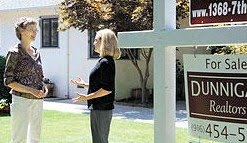
Last week I did an interview with Michael Shaw of the Sacramento Business Journal about Sacramento home buyers and their motivation to purchase homes with (or without) the state and federal tax credits. He also interviewed one of my dear buyer clients...and they did a photo shoot. The article appears in this week's edition of the Sacramento Business Journal.
I have noticed that most of the buyers I have been working with, in all price ranges, were not deterred by the sunset of the home buyer tax credit...buyers had to be in contract by April 30th, 2010, and originally were supposed to have closed escrow by June 30th, though that date was extended to September 30th, 2010 due to the extended escrow time periods associated with negotiating short sales.
You can read the article here.
Friday, November 6, 2009
Obama Extends & Expands Home Buyer Tax Credit by Signing HR 3548
If you follow me on Twitter, you will already know that HR 3548 has been signed by President Obama…There was language added into this bill that extends and expands the home buyer tax credit! As part of its plan to further stimulate the U.S. housing market, this legislation:
- Extends the First-Time Home Buyer Tax Credit of up to $8,000 to first-time home buyers until April 30, 2010 (with another 60-day extension for buyers who are in contract as of this date, and who close escrow on or before June 30, 2010). A “first-time home buyer” is a purchaser and spouse may not have owned a residence during the three years prior to the purchase.
- Expands the credit to grant up to $6,500 credit to non-first time buyers purchasing a new or existing home between November 7, 2009 and April 30, 2010.
There are many nuances to this legislation, so please speak with your CPA regarding your qualifications for these tax credits and your eligibility. Here is a Q&A from the National Association of Realtors regarding how to obtain the tax credit.
Friday, May 15, 2009
Sacramento's First Time Buyers...and how did the Giants loose tonight?
In light of the fact I am completely annoyed that the Giants' bullpen somehow managed to blow their 3 run lead this evening, rather than watch the rest of the game, I have decided to write a blog instead. I had a really long day and was hoping to relax in front of the tube and watch the Giants win...but I find blogging very therapeutic, so here we are.
So lately, the vast majority of my buyer clients have been first time home buyers. This is truly an exciting time to be a first time buyer! Why?
In many cases, your monthly mortgage payment will be roughly the same as your monthly rent payment. The median home price in Sacramento County in April 2009 was $165,000. Using an FHA loan program, $165,000 with the required 3.5% downpayment ($5,775), the monthly payment comes out to approximately $1,132...that is the fully loaded monthly payment for a 30-year fixed loan at 5%, including your principle, interest, property taxes, homeowner's insurance, and mortgage insurance.
There are some very advantageous tax credits available to first time buyers at both the state and federal level. The California state tax credit is up to $10,000 spread out over 3 years, applies only to new construction homes purchased until March of 2010. There is a cap on the total tax credit of $100M...so the money runs out, and all that make qualifying purchases may not be able to take advantage of the credit. The federal tax credit is up to $8,000 for any principle residence purchased before December 1, 2009. Please check with your CPA to see how you may qualify for these tax incentives.
There are several first time buyer grants and downpayment assistance programs available. Many are based on your profession, household income, number of people in your household, and the city or county where the home is. These programs change all the time, and availability of funds changes all the time too...be sure to work closely with your loan officer to see if you qualify.
All good stuff...the combination of these circumstances is just too much for most first time buyers to resist!
Anyway, in the time it took me to write this post, the Giants LOST to the Mets 8-6! What a joke...Starting pitcher Tim Lincecum got a no decision. GRRR.
So lately, the vast majority of my buyer clients have been first time home buyers. This is truly an exciting time to be a first time buyer! Why?
In many cases, your monthly mortgage payment will be roughly the same as your monthly rent payment. The median home price in Sacramento County in April 2009 was $165,000. Using an FHA loan program, $165,000 with the required 3.5% downpayment ($5,775), the monthly payment comes out to approximately $1,132...that is the fully loaded monthly payment for a 30-year fixed loan at 5%, including your principle, interest, property taxes, homeowner's insurance, and mortgage insurance.
There are some very advantageous tax credits available to first time buyers at both the state and federal level. The California state tax credit is up to $10,000 spread out over 3 years, applies only to new construction homes purchased until March of 2010. There is a cap on the total tax credit of $100M...so the money runs out, and all that make qualifying purchases may not be able to take advantage of the credit. The federal tax credit is up to $8,000 for any principle residence purchased before December 1, 2009. Please check with your CPA to see how you may qualify for these tax incentives.
There are several first time buyer grants and downpayment assistance programs available. Many are based on your profession, household income, number of people in your household, and the city or county where the home is. These programs change all the time, and availability of funds changes all the time too...be sure to work closely with your loan officer to see if you qualify.
All good stuff...the combination of these circumstances is just too much for most first time buyers to resist!
Anyway, in the time it took me to write this post, the Giants LOST to the Mets 8-6! What a joke...Starting pitcher Tim Lincecum got a no decision. GRRR.
Thursday, December 29, 2022
Short sales in Sacramento -- will they amount to a significant part of the market in 2023 and beyond? Your short sale questions answered...

By my count today, there are 13 active and pending short sale listings in all of Sacramento County (out of 2,450 active and pending listings). That is approximately one half of one percent. So in other words today, 99.5% of listings are not short sales, and 0.5% of listings are short sales. That is a drop in the bucket. Back in the Great Recession, the vast majority of my listings were short sales. And short sales and other types of distressed property listings absolutely DOMINATED the market. Between my own client listings, and the listings of other agents where they contracted with me solely to negotiate the short sale side of the equation -- I closed well over 100 of these highly complex transactions.
Keep in mind that listing or purchasing a short sale is A LOT different than a traditional resale real estate transaction with a traditional seller who has home equity. I tell my clients to take everything they think they know about buying real estate and throw it out the window.
So putting my Short Sale Agent hat on, here are the answers to some commonly asked questions:
What is a short sale? A homeowner who needs to sell ultimately owes more on the property than it is currently worth, so they list the house with a real estate agent who then attempts to negotiate a lower payoff with the owner's mortgage company so the owner can sell the house. For example, if the property is worth $500,000, however the owner has a mortgage for $550,000 the owner would not be able to sell the home and pay off the mortgage with the proceeds of the sale. The property would be listed for $500,000, an offer received from a buyer and accepted by the seller SUBJECT TO LENDER APPROVAL, and the agent would negotiate with the mortgage company to accept the net proceeds of that sale at its current market value. An important note -- usually there needs to be a compelling reason to sell or a financial hardship on the seller's end for the mortgage company to entertain allowing a payoff for less than the mortgage amount owed.
Is a short sale quick? How long will I wait for approval? The term "short sale" is often confused with a quick time period and close of escrow. Short sales are not usually quick. While some mortage companies will provide for a pre-approved short sale process, the average waiting period for the seller's mortgage company to approve the short sale is probably 30-60 days once an buyer offer is submitted. Some take less time...some take A LOT more time. The fastest approval I have received on one of my short sale listings was 11 days. The longest was almost 2 years. Once a short sale is approved, then the bank typically allows the buyer somewhere from 21-30 days to close the transaction. There are SO many variables that will dictate the length of time it takes to get approval...like which lender services the mortgage, which entity owns the mortgage, how many loans there are on the house, how knowledgeable the listing agent is, how cooperative the seller is with the process, if the seller is trying to use a government short sale program, etc. There is also no guarantee a mortgage company will approve a short sale at all. So.......fasten your seatbelt.
Does the seller have to be delinquent with mortgage payments to get a short sale approved? No. I have successfully closed several short sales where the seller stayed current with payments.
Who decides what the listing price is? The price listed in MLS may not be the price the seller's mortgage company is willing to accept. Usually the listing agent will set the price based on market value, and in consultation with the seller. Some mortgage companies offer a pre-approval process for short sales but I would guess that very few listing agents and sellers do this in advance of listing the property for sale. The seller's mortgage company will do its own valuation or appraisal (often referred to as a BPO - or Broker Price Opinion) to validate the offered price. The bank may counter your offer. Heck, they may counter a perfectly reasonable market value offer too... in addition to the possibility of countering the price you offer, the lender may counter the terms of your offer.
Who pays the real estate agent commissions? In a short sale scenario, the lender(s) who agree to forgive debt and allow a short payoff of the loan(s) pay for the real estate agent commissions - generally by absorbing the costs of the commissions out of the proceeds of the sale. As a side note, oftentimes these commissions are re-negotiated by the lender(s) during the process. Note: Real estate commissions are always negotiable and NOT set by law or local custom.
Who pays title insurance, escrow fees, and transfer tax fees? These are negotiable between buyer and seller when the offer is initially negotiated (before it is submitted to the lenders for approval). For example, perhaps the buyer and seller agree initially that the seller will pay for 100% of title insurance and escrow fees, 100% of county transfer tax, 50% the city transfer tax. The lender(s) may negotiate that the buyer pay a different split of these fees...however the portion that is paid by "the seller" is absorbed into the overall debt forgiveness and short payoff. Occasionally you will see a lender agree to pay one of these fees, up to and not to exceed a certain amount (for example, they may agree to cover up to $750 of the escrow fee that costs $1200). Generally then, the buyer would cover the unpaid portion of that fee. So basically, again, the lender(s) will absorb many of those types of fees.
Who pays for a home warranty? This is negotiable between buyer and seller when the offer is initially negotiated (before it is submitted to the lenders for approval). Generally though, I would prepare any buyer of a Sacramento short sale property to expect to pay for this cost, even if you ask the seller or short sale lender to cover it. In my experience, this is paid by the short sale lender in less than 20% of my approved short sales.
Who pays for home inspections, certifications, or repairs? These are negotiable between buyer and seller when the offer is initially negotiated (before it is submitted to the lenders for approval). Most short sale lenders will not agree to cover things like pest or termite inspections, roof inspections, sewer line inspections, or any corresponding repairs or certifications. A lot will depend on the circumstances with the condition of the property, how many loans are involved, the buyers' loan program, if the property is in default, the length of time of negotiation, etc. As a safety net - buyers, do not expect that lenders will grant these requests. Generally short sale properties are sold "as-is" and sellers can not afford to make repairs anyway.
Will the short sale lender(s) give the buyer credits for closing costs or interest rate buydowns? These are negotiable between buyer and seller when the offer is initially negotiated (before it is submitted to the lenders for approval). I have seen this vary widely from the short sale lender(s) agreeing to pay up to 3% closing costs for the buyer, to the short sale lender(s) rejecting those requests. Again, much will depend on the circumstances surrounding the sale of the property.
Who pays delinquent property taxes or unpaid utility liens? It depends. Sellers, if you have not been paying your property taxes or county utilities, you really need to let your agent know this ASAP! I work closely with the title company on this to make sure that we know of any lien issues in advance, but because it can take several weeks or months to get approval, new liens may pop up during the lender negotiation process. When I negotiate short sales, one of my worst fears is that after the short sale is approved an unexpected lien will pop up. This has happened to me before, and for lack of a better way of describing it - this sucks! If you can let your agent know in advance that these items are unpaid, it will save lots of headaches all the way around. IF WE KNOW in advance that these liens exist, there is a great chance that the short sale lender will absorb these costs into their overall debt forgiveness and short payoff. IF WE DO NOT KNOW in advance that liens exist, once the short sale is approved - this will halt the transaction until we can find a way to pay these liens. The seller is often financially unable to pay them, the buyer usually does not want to pay, the agents commission has already been reduced, and the short sale lender has already taken a loss on the loan. Sellers - please save everyone a headache and communicate with your agent.
I have IRS and FTB Tax liens, can I do a short sale? Yes. There is a parallel process to get what's known as a "valueless discharge" of liens when doing a short sale. This does not release you from owing IRS or FTB tax debt but it does release the debt from the property so it can be sold. Again, be up-front with your agent if these exist so your agent can initiate the paperwork and process asap.
Can I buy a short sale property from my sibling/parent/cousin/spouse/relative? No. Short sales must be "Arm's Length" transactions and all parties will have to sign an affidavit stating no parties are related.
Are there tax or legal ramifications for sellers who do a short sale? The best answer I can provide here is that you need to speak to a CPA or an attorney. Every seller's circumstance is different. Some may face income tax on forgiven debt while others may not.
Clear as mud, right? My advice to you is to find a competent Sacramento short sale agent to help you navigate the process. I have done A LOT of these transactions and would be happy to answer your questions.
Thursday, September 11, 2008
Ask Erin: Who pays for what in a short sale scenario? ...AND... What does the seller in a short sale pay for?
Get ready for another long-winded blog...I am often asked these question by sellers facing the possibility of attempting a short sale of their property. Having successfully closed several of these, I will tell ya'll what I know to be true based on my experiences.
-Who pays agent commissions? In a short sale scenario, the lender(s) who agree to forgive debt and allow a short payoff of the loan(s) pay the agent commissions. Sometimes these are re-negotiated by the lender(s) during the process.
-Who pays title, escrow, and transfer tax fees? These are negotiable between buyer and seller when the offer is initially negotiated (before it is submitted to the lenders for approval). For example, perhaps the buyer and seller agree initially that the seller will pay for 100% of title and escrow fees, 100% of county transfer tax, 50% the city transfer tax. The lender(s) may negotiate that the buyer pay a different split of these fees...however the portion that is paid by "the seller" is absorbed in to the overall debt forgiveness and short payoff. So basically, again, the lender(s) pay these fees in some.
-Who pays for inspections or certifications? These are negotiable between buyer and seller when the offer is initially negotiated (before it is submitted to the lenders for approval). I have seen this vary widely from the short sale lender(s) agreeing to pay for pest inspections, pest clearances, roof certifications, etc., to lender(s) that do not agree to pay for any inspections or clearances. A lot will depend on the circumstances with the condition of the property, how many loans are involved, the buyers loan program, if the property is in default, the length of time of negotiation, etc. As a safety net - buyers, do not expect that lenders will grant these requests. Generally short sale properties are sold "as-is."
-Will the lender(s) give the buyer credits for closing costs? These are negotiable between buyer and seller when the offer is initially negotiated (before it is submitted to the lenders for approval). I have seen this vary widely from the short sale lender(s) agreeing to pay up to 6% closing costs for the buyer (including an instance of seller-funded downpayment assistance...which is now a long shot thanks to HR 3221), to the lender(s) rejecting those requests. Again, much will depend on the circumstances surrounding the sale of the property.
-Who pays delinquent property taxes or liens? Sellers - if you have not been paying your property taxes or county utilities, you really need to let your agent know this ASAP! I work closely with the title company on this to make sure that we know of any lien issues in advance, but because it can take several weeks or months to get approval, new liens may pop up during the lender negotiation process. When I negotiate short sales, one of my worst fears is that after the short sale is approved an unexpected lien will pop up. This has happened to me before, and for lack of a better way of describing it - this sucks! If you can let your agent know in advance that these items are unpaid, it will save lots of headaches all the way around. IF WE KNOW in advance that these liens exist, there is a great chance that the short sale lender will absorb these costs into their overall debt forgiveness and short payoff. IF WE DO NOT KNOW in advance that liens exist, once the short sale is approved - this will halt the transaction until we can find a way to pay these liens. The seller is often financially unable to pay them, the buyer does not want to pay, the agents commission has already been reduced, and the lender has already taken a loss on the loan. Sellers - communicate with your agents.
Unless asked to carry an unsecured promissary note (which has not happened in any of my short sales), the seller usually pays nothing out of pocket to close the transaction. The seller can not make any money from a short sale either. Hope that answers some frequently asked short sale questions...cheers!
-Who pays agent commissions? In a short sale scenario, the lender(s) who agree to forgive debt and allow a short payoff of the loan(s) pay the agent commissions. Sometimes these are re-negotiated by the lender(s) during the process.
-Who pays title, escrow, and transfer tax fees? These are negotiable between buyer and seller when the offer is initially negotiated (before it is submitted to the lenders for approval). For example, perhaps the buyer and seller agree initially that the seller will pay for 100% of title and escrow fees, 100% of county transfer tax, 50% the city transfer tax. The lender(s) may negotiate that the buyer pay a different split of these fees...however the portion that is paid by "the seller" is absorbed in to the overall debt forgiveness and short payoff. So basically, again, the lender(s) pay these fees in some.
-Who pays for inspections or certifications? These are negotiable between buyer and seller when the offer is initially negotiated (before it is submitted to the lenders for approval). I have seen this vary widely from the short sale lender(s) agreeing to pay for pest inspections, pest clearances, roof certifications, etc., to lender(s) that do not agree to pay for any inspections or clearances. A lot will depend on the circumstances with the condition of the property, how many loans are involved, the buyers loan program, if the property is in default, the length of time of negotiation, etc. As a safety net - buyers, do not expect that lenders will grant these requests. Generally short sale properties are sold "as-is."
-Will the lender(s) give the buyer credits for closing costs? These are negotiable between buyer and seller when the offer is initially negotiated (before it is submitted to the lenders for approval). I have seen this vary widely from the short sale lender(s) agreeing to pay up to 6% closing costs for the buyer (including an instance of seller-funded downpayment assistance...which is now a long shot thanks to HR 3221), to the lender(s) rejecting those requests. Again, much will depend on the circumstances surrounding the sale of the property.
-Who pays delinquent property taxes or liens? Sellers - if you have not been paying your property taxes or county utilities, you really need to let your agent know this ASAP! I work closely with the title company on this to make sure that we know of any lien issues in advance, but because it can take several weeks or months to get approval, new liens may pop up during the lender negotiation process. When I negotiate short sales, one of my worst fears is that after the short sale is approved an unexpected lien will pop up. This has happened to me before, and for lack of a better way of describing it - this sucks! If you can let your agent know in advance that these items are unpaid, it will save lots of headaches all the way around. IF WE KNOW in advance that these liens exist, there is a great chance that the short sale lender will absorb these costs into their overall debt forgiveness and short payoff. IF WE DO NOT KNOW in advance that liens exist, once the short sale is approved - this will halt the transaction until we can find a way to pay these liens. The seller is often financially unable to pay them, the buyer does not want to pay, the agents commission has already been reduced, and the lender has already taken a loss on the loan. Sellers - communicate with your agents.
Unless asked to carry an unsecured promissary note (which has not happened in any of my short sales), the seller usually pays nothing out of pocket to close the transaction. The seller can not make any money from a short sale either. Hope that answers some frequently asked short sale questions...cheers!
Monday, October 6, 2008
My Thoughts on the Bailout...
I have been asked about a thousand times over the last two weeks what I think about the bailout...aka, the Emergency Economic Stabilization Act of 2008 (HR 1424). Because my laptop was MIA most of the last two weeks, I did not post any blogs regarding my thoughts. I do understand both sides of the argument, and resigned myself to the fact that some flavor of a bailout would be approved.
I have read most of the 451 pages...some of it is mind-numbing. What I find interesting, is that in 451 pages of this bailout legislation, there are numerous sections of energy-related provisions, random tax credits, mental health care coverages, disaster relief, and all kinds of stuff that seems to have been thrown in there by whoever sponsored the legislation.
I have heard several theories. I will be curious to see the actual execution of this "economic stabilization." So what is my opinion? I am not ashamed to admit that I really do not know what to think about it. I am a Realtor, not an economist...
I have read most of the 451 pages...some of it is mind-numbing. What I find interesting, is that in 451 pages of this bailout legislation, there are numerous sections of energy-related provisions, random tax credits, mental health care coverages, disaster relief, and all kinds of stuff that seems to have been thrown in there by whoever sponsored the legislation.
I have heard several theories. I will be curious to see the actual execution of this "economic stabilization." So what is my opinion? I am not ashamed to admit that I really do not know what to think about it. I am a Realtor, not an economist...
Thursday, April 16, 2009
March 2009 Sacramento County Real Estate Statistics
The Sacramento real estate market is really heating up lately...if my own personal activity is any indication, I have multiple offers on many of my {short sale} listings, and have written several offers for buyer clients in the last few weeks.

Supply and demand is a pretty basic economic principle...if you look at the number of homes on the market versus the number of homes pending sale, there is only a 2-month supply of homes on the market. Just to flash back...in September 2007, the supply of homes had reached / peaked 15 months. Please keep in mind that not all areas and neighborhoods are affected in the same way...if you would like me to email you statistical graphs for a specific zip code, feel free to email me at erin@erinattardi.com.
Some interesting market factiods? Slightly more than 66% of the homes that sold last month were Bank-Owned REO's. Approximately 95% of the homes sold last month were priced under $400,000. The median price last month was at a level last recorded in February 2001. March 2009 is the 12 straight month that the sales volume was higher than the same month the previous year. Interest rates have been hovering around the 5% mark. There are new state and federal first time buyer tax credits available. In certain cases, a home's monthly mortgage payment is less than rent for a comparable property.


Supply and demand is a pretty basic economic principle...if you look at the number of homes on the market versus the number of homes pending sale, there is only a 2-month supply of homes on the market. Just to flash back...in September 2007, the supply of homes had reached / peaked 15 months. Please keep in mind that not all areas and neighborhoods are affected in the same way...if you would like me to email you statistical graphs for a specific zip code, feel free to email me at erin@erinattardi.com.
Some interesting market factiods? Slightly more than 66% of the homes that sold last month were Bank-Owned REO's. Approximately 95% of the homes sold last month were priced under $400,000. The median price last month was at a level last recorded in February 2001. March 2009 is the 12 straight month that the sales volume was higher than the same month the previous year. Interest rates have been hovering around the 5% mark. There are new state and federal first time buyer tax credits available. In certain cases, a home's monthly mortgage payment is less than rent for a comparable property.

Monday, December 27, 2010
Short Sales: Who pays for what...
I receive several calls per week from homeowners that are looking for information regarding Sacramento short sales, and aside from wanting to know about the process itself, one most common questions I get from them pertain to if the sale will cost them anything out of pocket, if so, then how much, and generally, who pays for what fees. Having successfully closed several short sales, I will tell ya'll what I know to be true based on my experiences.
-Who pays the real estate agent commissions? In a short sale scenario, the lender(s) who agree to forgive debt and allow a short payoff of the loan(s) pay for the real estate agent (or Realtor) commissions - generally by absorbing the costs of the commissions out of the proceeds of the sale. As a side note, often times these commissions are re-negotiated by the lender(s) during the process. Note: Real estate commissions are always negotiable and NOT set by law or local custom.
-Who pays title insurance, escrow fees, and transfer tax fees? These are negotiable between buyer and seller when the offer is initially negotiated (before it is submitted to the lenders for approval). For example, perhaps the buyer and seller agree initially that the seller will pay for 100% of title insurance and escrow fees, 100% of county transfer tax, 50% the city transfer tax. The lender(s) may negotiate that the buyer pay a different split of these fees...however the portion that is paid by "the seller" is absorbed in to the overall debt forgiveness and short payoff. Occasionally you will see a lender agree to pay one of these fees, up to and not to exceed a certain amount (for example, they may agree to cover up to $750 of the escrow fee that costs $1200). Generally then, the buyer would cover the unpaid portion of that fee. So basically, again, the lender(s) will absorb many of those types of fees.
-Who pays for a home warranty? This is negotiable between buyer and seller when the offer is initially negotiated (before it is submitted to the lenders for approval). Generally though, I would prepare any buyer of a Sacramento short sale property to expect to pay for this cost, even if you ask the seller or short sale lender to cover it. In my experience, this is paid by the short sale lender in less than 20% of my approved short sales.
-Who pays for inspections or certifications? These are negotiable between buyer and seller when the offer is initially negotiated (before it is submitted to the lenders for approval). Again, most short sale lenders will not agree to cover things like pest or termite inspections, roof inspections, sewer line inspections, or any corresponding certifications. A lot will depend on the circumstances with the condition of the property, how many loans are involved, the buyers' loan program, if the property is in default, the length of time of negotiation, etc. As a safety net - buyers, do not expect that lenders will grant these requests. Generally short sale properties are sold "as-is" and sellers can not afford to make repairs anyway.
-Will the lender(s) give the buyer credits for closing costs? These are negotiable between buyer and seller when the offer is initially negotiated (before it is submitted to the lenders for approval). I have seen this vary widely from the short sale lender(s) agreeing to pay up to 6% closing costs for the buyer (including an instance of seller-funded downpayment assistance...which is no longer possible thanks to past legislation), to the short sale lender(s) rejecting those requests. Again, much will depend on the circumstances surrounding the sale of the property.
-Who pays delinquent property taxes or liens? Sellers - if you have not been paying your property taxes or county utilities, you really need to let your agent know this ASAP! I work closely with the title company on this to make sure that we know of any lien issues in advance, but because it can take several weeks or months to get approval, new liens may pop up during the lender negotiation process. When I negotiate short sales, one of my worst fears is that after the short sale is approved an unexpected lien will pop up. This has happened to me before, and for lack of a better way of describing it - this sucks! If you can let your agent know in advance that these items are unpaid, it will save lots of headaches all the way around. IF WE KNOW in advance that these liens exist, there is a great chance that the short sale lender will absorb these costs into their overall debt forgiveness and short payoff. IF WE DO NOT KNOW in advance that liens exist, once the short sale is approved - this will halt the transaction until we can find a way to pay these liens. The seller is often financially unable to pay them, the buyer does not want to pay, the agents commission has already been reduced, and the short sale lender has already taken a loss on the loan. Sellers - please save everyone a headache and communicate with your agent.
To make a bit of a sweeping generalization, the seller usually pays nothing out of pocket to close the transaction unless specifically asked to by the lender(s).
In perhaps one instance out of every six short sale transactions I close, the lender will request that the seller make a cash contribution to close the short sale. In these instances that I have negotiated, the sellers have had cash in the bank and were financially able to make that contribution...in those instances, the lowest cash contribution one of my short sale sellers has contributed was $1,000, and the highest was $5,000.
Also, you should note that in some short sale scenarios, the short sale lender will actually pay the seller "relocation assistance" to close the short sale. I have seen this in the range of $1,000 - $5,000. Not every Sacramento short sale transaction will qualify though.
Hope that answers some frequently asked short sale questions...cheers!
-Who pays the real estate agent commissions? In a short sale scenario, the lender(s) who agree to forgive debt and allow a short payoff of the loan(s) pay for the real estate agent (or Realtor) commissions - generally by absorbing the costs of the commissions out of the proceeds of the sale. As a side note, often times these commissions are re-negotiated by the lender(s) during the process. Note: Real estate commissions are always negotiable and NOT set by law or local custom.
-Who pays title insurance, escrow fees, and transfer tax fees? These are negotiable between buyer and seller when the offer is initially negotiated (before it is submitted to the lenders for approval). For example, perhaps the buyer and seller agree initially that the seller will pay for 100% of title insurance and escrow fees, 100% of county transfer tax, 50% the city transfer tax. The lender(s) may negotiate that the buyer pay a different split of these fees...however the portion that is paid by "the seller" is absorbed in to the overall debt forgiveness and short payoff. Occasionally you will see a lender agree to pay one of these fees, up to and not to exceed a certain amount (for example, they may agree to cover up to $750 of the escrow fee that costs $1200). Generally then, the buyer would cover the unpaid portion of that fee. So basically, again, the lender(s) will absorb many of those types of fees.
-Who pays for a home warranty? This is negotiable between buyer and seller when the offer is initially negotiated (before it is submitted to the lenders for approval). Generally though, I would prepare any buyer of a Sacramento short sale property to expect to pay for this cost, even if you ask the seller or short sale lender to cover it. In my experience, this is paid by the short sale lender in less than 20% of my approved short sales.
-Who pays for inspections or certifications? These are negotiable between buyer and seller when the offer is initially negotiated (before it is submitted to the lenders for approval). Again, most short sale lenders will not agree to cover things like pest or termite inspections, roof inspections, sewer line inspections, or any corresponding certifications. A lot will depend on the circumstances with the condition of the property, how many loans are involved, the buyers' loan program, if the property is in default, the length of time of negotiation, etc. As a safety net - buyers, do not expect that lenders will grant these requests. Generally short sale properties are sold "as-is" and sellers can not afford to make repairs anyway.
-Will the lender(s) give the buyer credits for closing costs? These are negotiable between buyer and seller when the offer is initially negotiated (before it is submitted to the lenders for approval). I have seen this vary widely from the short sale lender(s) agreeing to pay up to 6% closing costs for the buyer (including an instance of seller-funded downpayment assistance...which is no longer possible thanks to past legislation), to the short sale lender(s) rejecting those requests. Again, much will depend on the circumstances surrounding the sale of the property.
-Who pays delinquent property taxes or liens? Sellers - if you have not been paying your property taxes or county utilities, you really need to let your agent know this ASAP! I work closely with the title company on this to make sure that we know of any lien issues in advance, but because it can take several weeks or months to get approval, new liens may pop up during the lender negotiation process. When I negotiate short sales, one of my worst fears is that after the short sale is approved an unexpected lien will pop up. This has happened to me before, and for lack of a better way of describing it - this sucks! If you can let your agent know in advance that these items are unpaid, it will save lots of headaches all the way around. IF WE KNOW in advance that these liens exist, there is a great chance that the short sale lender will absorb these costs into their overall debt forgiveness and short payoff. IF WE DO NOT KNOW in advance that liens exist, once the short sale is approved - this will halt the transaction until we can find a way to pay these liens. The seller is often financially unable to pay them, the buyer does not want to pay, the agents commission has already been reduced, and the short sale lender has already taken a loss on the loan. Sellers - please save everyone a headache and communicate with your agent.
To make a bit of a sweeping generalization, the seller usually pays nothing out of pocket to close the transaction unless specifically asked to by the lender(s).
In perhaps one instance out of every six short sale transactions I close, the lender will request that the seller make a cash contribution to close the short sale. In these instances that I have negotiated, the sellers have had cash in the bank and were financially able to make that contribution...in those instances, the lowest cash contribution one of my short sale sellers has contributed was $1,000, and the highest was $5,000.
Also, you should note that in some short sale scenarios, the short sale lender will actually pay the seller "relocation assistance" to close the short sale. I have seen this in the range of $1,000 - $5,000. Not every Sacramento short sale transaction will qualify though.
Hope that answers some frequently asked short sale questions...cheers!
Subscribe to:
Posts (Atom)



 Posts
Posts